
The CPAP alternative you will actually use.
A custom oral appliance treats obstructive sleep apnea and loud snoring. Quiet, portable, and comfortable enough to wear every night, which is the part that decides whether treatment works.
Obstructive sleep apnea is a condition in which the airway repeatedly narrows or closes during sleep, interrupting breathing for ten seconds or more at a time, sometimes dozens of times an hour. Each episode pulls you briefly out of deep sleep to reopen the airway. Most people who have it do not know they do.
Oral appliance therapy treats it with a custom device, worn only during sleep, that holds the lower jaw slightly forward so the airway stays open. It is prescribed after a physician diagnoses apnea, and it is billed as medical care.
The signs that are easy to dismiss
- Loud, habitual snoring, usually noticed by someone else first
- Waking unrefreshed no matter how long you were in bed
- Daytime sleepiness, brain fog, or nodding off in the afternoon
- Morning headaches, or a dry or sore throat on waking
- Gasping or choking awake, or a partner who has seen you stop breathing
- Waking with a tight jaw, or teeth that are visibly worn
Why treating it matters
Untreated obstructive sleep apnea is not only a sleep problem. In the sleep medicine literature it is associated over time with hypertension, atrial fibrillation and other arrhythmias, stroke, and coronary events, and it makes type 2 diabetes and depression harder to control. Those are population-level associations, not a prediction about any one person, and no honest practice will tell you otherwise.
What is worth saying plainly: the decision that matters most is not which treatment is theoretically strongest. It is which treatment you will use on an ordinary Tuesday night, indefinitely.
How oral appliance therapy works
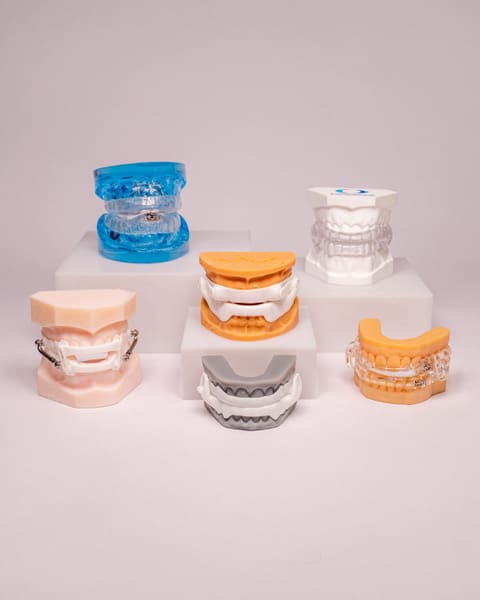
A custom oral appliance, sometimes called a mandibular advancement device, is fitted to your teeth from a digital scan. Worn during sleep, it advances the lower jaw by a small, adjustable amount. That brings the tongue and the soft tissue at the back of the throat forward with it, so the airway has room to stay open. The amount of advancement is titrated over follow-up visits, because the right position is the smallest one that works.
It is not a drugstore anti-snoring tray. An over-the-counter boil-and-bite cannot be titrated, is not fitted to your bite, and can move teeth or aggravate a jaw joint.
- Diagnosis code
- G47.33 obstructive sleep apnea
- Prescribed by
- A physician, after a sleep study
- Delivered by
- Dr. Kathryn Sudikoff, DMD, Diplomate of the American Board of Dental Sleep Medicine
- Billed as
- Medical, including Medicare DME
An honest comparison.
| Feature | Oral appliance | CPAP |
|---|---|---|
| Comfort | A custom mouthpiece; nothing over the face | Mask, straps, and a hose to a bedside machine |
| Noise | Silent | Pump and air noise, quieter on newer units |
| Travel | Fits in a pocket, needs no power | Needs the machine, power, and often distilled water |
| Nightly use | Generally high; most people wear it every night | Often lower; a significant share of users stop within a year |
| Effect on apnea events | Reduces events, often not as far as CPAP on a given night | The largest reduction in events when it is worn |
| Best suited to | Mild to moderate OSA, snoring, CPAP intolerance, travel | Severe OSA, especially when the patient tolerates it well |
CPAP remains the first-line treatment for severe obstructive sleep apnea when a patient tolerates it, and we say so. An oral appliance is the right conversation when CPAP has failed, is not an option, or when apnea is mild to moderate. For some patients the answer is both, used in combination.
What treatment here involves
- Review of your sleep study, or help arranging a home sleep apnea test
- Examination of the airway, jaw joint, and bite before anything is prescribed
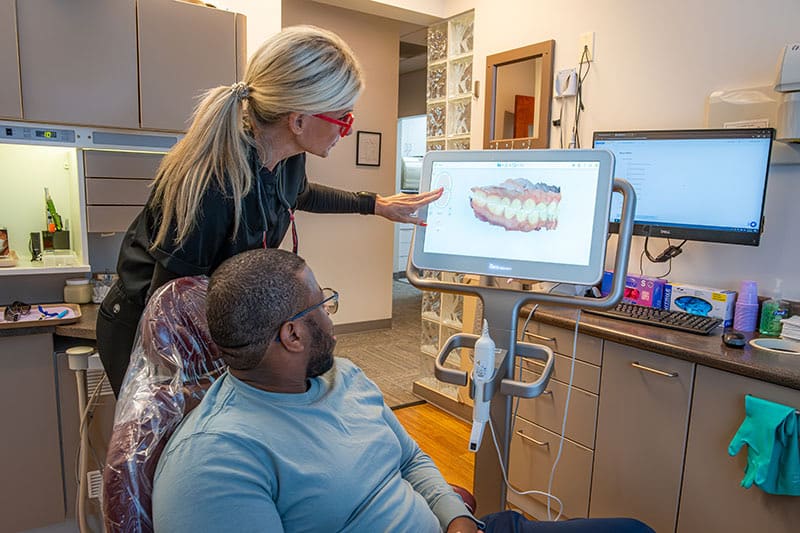
- A digital scan and a custom appliance built to your anatomy
- Titration visits to find the smallest effective jaw position
- Coordination with your sleep physician, including follow-up testing
- Benefit verification and medical or Medicare billing handled in the office
Related reading: the appliances we fit, how home sleep testing works, and how the jaw and airway connect.
Sleep apnea, answered.
Is an oral appliance really as effective as CPAP?
It depends on what you measure. CPAP typically produces a larger reduction in apnea events on a night when it is worn. Oral appliance therapy is usually worn more consistently, and in head-to-head studies the two often end up producing similar improvements in daytime sleepiness, blood pressure, and quality of life because of that difference in adherence. For mild to moderate obstructive sleep apnea, and for anyone who cannot tolerate CPAP, an oral appliance is a recognized treatment.
How does an oral appliance actually stop apnea?
It holds the lower jaw slightly forward during sleep. That advances the tongue and the soft tissue at the back of the throat, so the airway has enough room to stay open instead of collapsing. There is no mask, no hose, and no electricity.
Will my insurance cover it?
Usually. Oral appliance therapy for diagnosed obstructive sleep apnea is a medical benefit under most plans and under Medicare, where it is billed as durable medical equipment. This practice is a registered Medicare DME provider and verifies your benefits before treatment starts.
Do I need a sleep study first?
Yes. Obstructive sleep apnea is a medical diagnosis and treatment follows a study read by a physician. You do not need to have that arranged before you call, though. We review a study if you have one and help arrange a home sleep apnea test if you do not.
What if I already tried CPAP and hated it?
That is the most common reason people come here. A large share of people prescribed CPAP stop using it, and a treatment that is not used is not treating anything. Switching to a device you will actually wear is often the single biggest change available to you.
How long does the process take?
After diagnosis, we take a digital scan, the appliance is manufactured, and it is fitted in the office. Most people adapt within one to two weeks. The device is then titrated over several follow-up visits, and your physician can arrange repeat testing to confirm the result.
Are there side effects?
Early on, some people notice jaw soreness, extra saliva, or a bite that feels slightly off in the morning. These usually settle. Longer-term appliance use can produce small changes in tooth position and bite, which is one reason follow-up visits matter and why a device should be fitted and monitored by a dentist trained in dental sleep medicine.
Does it treat snoring as well?
Yes. The same jaw position that keeps the airway open also reduces the vibration that causes snoring. Snoring on its own is coded separately (R06.83) and should be evaluated for apnea before it is treated as a nuisance.
Clinically reviewed by Dr. Kathryn Sudikoff, DMD, Diplomate of the American Board of Dental Sleep Medicine.Reviewed
Find out whether an appliance suits your case.
A short conversation is the fastest way to find out whether we can help. Most sleep and TMJ care here is billed to medical insurance.