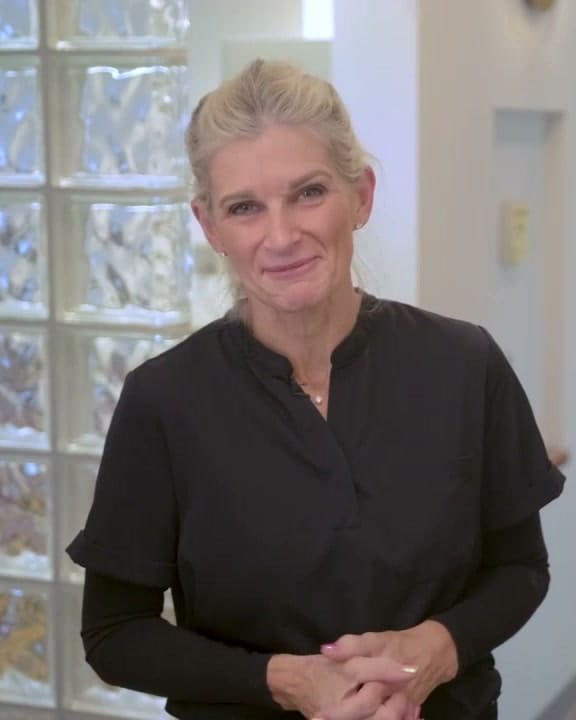
A dental sleep partner who closes the loop.
For the PAP-intolerant patient, and for the jaw pain with no clear dental cause. Send the study and the demographics; we handle the therapy, the billing, and the report back to you.
To refer: fax the completed referral form to (866) 864-3970, or call (704) 978-7790. Include the patient's demographics, a copy of the sleep study, and their insurance information.
Referral criteria
Our referral form asks you to indicate the diagnosis and the clinical reason for oral appliance therapy. The criteria on it are:
- The patient is intolerant of positive airway pressure (PAP) treatment
- The patient is not a candidate for PAP treatment
- The patient has decided, after all options were discussed, to proceed with oral appliance therapy as their initial treatment
- The patient requires combination treatment: an oral appliance plus CPAP
Diagnoses we treat under
- G47.33
- Obstructive sleep apnea
- R06.83
- Snoring
- Also treated
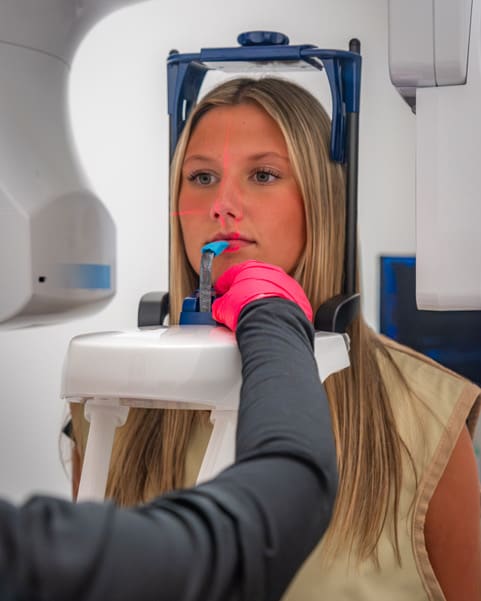
- Temporomandibular joint dysfunction and sleep-related bruxism, evaluated with T-Scan bite analysis, EMG, and cone-beam 3D imaging
What to send with the referral
- Patient demographics
- A copy of the sleep study, with the date of the PSG or HST and the AHI or RDI
- Patient insurance information
- Your signature on the Rx portion of the form
When an oral appliance is not the answer
Screening this out early saves your patient a visit and saves you a follow-up. An oral appliance depends on healthy teeth to hold it and a jaw that can be advanced, so the usual limiting factors are:
- Insufficient or unhealthy dentition. There has to be enough sound tooth structure to retain the device; extensive missing teeth or a full upper denture limits the options considerably.
- Active periodontal disease or untreated dental disease, which is stabilized before an appliance is delivered.
- Significantly limited mandibular protrusion or range of motion, or an actively symptomatic temporomandibular joint. Sometimes the jaw is treated first and the appliance follows.
- Central sleep apnea, or a suspicion of a sleep disorder other than obstructive apnea. That is a sleep medicine question, not a dental one.
- A patient who is doing well on PAP. If it is being worn and it is working, we say so.
None of these is a reason not to refer if you are unsure. They are the things the examination is looking for, and you will hear back either way.
What your patient receives
- Custom oral appliance therapy from a Diplomate of the American Board of Dental Sleep Medicine, using ProSomnus and SomnoMed devices
- A digital scan and in-office fitting, followed by titration visits
- Benefit verification, pre-authorization, and medical claim filing handled in-house
- Medicare DME billing where the patient is a Medicare beneficiary
What you receive
- Confirmation the patient was seen and what was found
- Notice of which appliance was delivered and when
- Follow-up progress, so efficacy testing can be scheduled on your side
- A practice that stays in scope and returns the patient to you
How oral appliance therapy fits alongside PAP
Oral appliance therapy is a recognized treatment for obstructive sleep apnea, particularly in mild to moderate disease and in patients who cannot tolerate PAP. PAP generally produces the larger reduction in AHI when it is worn; the practical case for an oral appliance is adherence, since a device that is used every night can deliver more real-world benefit than a machine that is not. We are explicit with patients that an appliance is not a way to avoid a diagnosis or to skip follow-up testing.
Three ways to send a patient
- Fax
- (866) 864-3970
- Phone
- (704) 978-7790
- Office
- 1315 East Blvd Unit 260
Charlotte, NC 28203
Please do not send protected health information by email. Fax or call.
Questions referring offices ask.
Which patients are appropriate for oral appliance therapy?
Adults with a physician diagnosis of obstructive sleep apnea who are intolerant of positive airway pressure, are not PAP candidates, or who choose an oral appliance as initial therapy after options have been discussed. Patients requiring combination therapy with PAP are also appropriate. Primary snoring without apnea can be treated once apnea has been excluded.
Do you require a sleep study before treating?
Yes. Obstructive sleep apnea is a medical diagnosis and treatment follows a physician-interpreted PSG or home sleep apnea test. If your patient has not been tested, we can help arrange home testing so the diagnosis stays with a physician.
Who writes the prescription?
You do. Oral appliance therapy for medically diagnosed obstructive sleep apnea is delivered on a physician's order. Our referral form is written as an Rx for that purpose and includes the criteria checkboxes and your signature line.
What do you send back to the referring office?
Confirmation that the patient was seen, what was found, which appliance was delivered, and how titration and follow-up are progressing, so the sleep study, the therapy, and any efficacy testing stay in one clinical record on your side.
How is it billed?
As medical care, not dental. The practice is a registered Medicare DME provider and files medical insurance claims, including benefit verification and pre-authorization, so your patient is not asked to fund it from dental benefits.
What should I expect it to do to the AHI?
Enough of a reduction to matter in many mild-to-moderate patients, and a partial reduction in others; it is not reliable to promise a number before the device is titrated. That is exactly why efficacy testing with the appliance in place is part of the plan rather than an optional extra, and why we ask you to arrange it once titration is complete.
How long from referral to a delivered appliance?
The sequence is consultation and examination, benefit verification and any pre-authorization, a digital scan, laboratory fabrication, delivery and fit, then titration visits over the following weeks. The insurance step is usually the variable one. If a case is time-sensitive, say so on the referral and we will tell you where it actually stands.
What happens if the appliance does not control it?
You hear about it. Depending on the finding, the next step may be a different device, combination therapy with PAP, or a referral back to you for a surgical or ENT opinion. The practice does not have an interest in keeping a patient in a treatment that is not working.
Who treats the patient?
Dr. Kathryn Sudikoff, DMD, a Diplomate of the American Board of Dental Sleep Medicine and a Fellow of the Las Vegas Institute, who has treated sleep-related breathing disorders and TMJ disorders since 2004.
Clinically reviewed by Dr. Kathryn Sudikoff, DMD, Diplomate of the American Board of Dental Sleep Medicine.Reviewed