
Oral appliance therapy, done properly.
A custom, FDA-cleared device worn only during sleep, built from a digital scan of your mouth and titrated over follow-up visits until it works.
An oral appliance is a custom device, worn during sleep, that holds the lower jaw slightly forward so the airway stays open. It is prescribed after a physician diagnoses obstructive sleep apnea, and it is adjustable, so the amount of advancement can be increased gradually to the smallest effective position.
Why the fitting matters more than the brand
Every appliance on the market works on the same principle. What separates a device that resolves symptoms from one that sits in a drawer is the fit, the amount of advancement, and whether anyone adjusts it after delivery. That is the work: an exam before the device is chosen, a scan rather than a tray, and titration visits afterwards.
Dr. Sudikoff is a Diplomate of the American Board of Dental Sleep Medicine and a Fellow of the Las Vegas Institute, and this is what the practice does all day rather than as an add-on to general dentistry.
The appliances fitted here
- ProSomnus
EVO, IA - Precision-milled, metal-free devices with a slim profile, which suits smaller mouths and patients who find bulkier appliances intolerable. Designed for controlled, repeatable jaw advancement.
- SomnoMed
SomnoDent Flex, SomnoMed Avant - A long-established line known for comfort in extended wear. The Flex uses a soft inner lining; the Avant pairs a hard outer shell with a softer inner material.
Both manufacturers' devices are FDA-cleared for the treatment of obstructive sleep apnea and snoring. Which one you receive is a clinical decision made after examination.
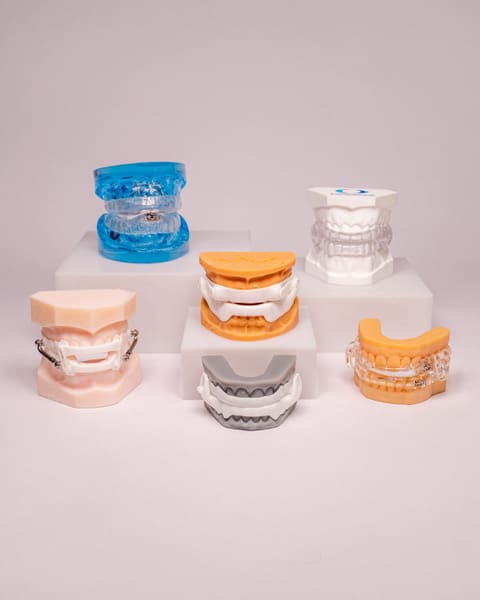
From scan to a device that works.
Evaluation
The airway, the jaw joint, and the bite are examined, and your sleep study is reviewed, before a device is selected.
Digital scan
An intraoral scan replaces impression trays and gives the laboratory an exact model to build from.
Delivery and fit
The appliance is fitted in the office, adjusted, and you are shown how to insert, remove, and care for it.
Titration
Over follow-up visits the advancement is increased in small increments until symptoms resolve, then stopped there.
Confirmation
Your physician can arrange repeat sleep testing with the device in place to verify it is working.
Not sure where to start? See how a diagnosis is confirmed, or how insurance and Medicare cover treatment.
Oral appliances, answered.
What makes a custom appliance different from a drugstore mouthguard?
A custom appliance is made from a digital scan of your teeth and is adjustable, so the amount the jaw is advanced can be titrated to the smallest position that works. A boil-and-bite tray is neither. It cannot be titrated, does not fit your bite, and can move teeth or aggravate a jaw joint while giving you the impression the problem is handled.
Which appliance will I get?
It depends on your anatomy, your bite, how much advancement is needed, and whether you have jaw joint symptoms. The practice fits ProSomnus devices, including the EVO and IA, and SomnoMed devices, including the SomnoDent Flex and the Avant. Dr. Sudikoff selects the device after examining you, not from a catalogue.
Is it comfortable to sleep in?
Most people adapt within one to two weeks. Early on it is normal to notice extra saliva, mild jaw soreness in the morning, or a bite that feels briefly off. Those usually settle. If they do not, the device is adjusted; that is what the follow-up visits are for.
How long does an appliance last?
A well-made custom device typically lasts several years with normal use, and Medicare and most plans have a replacement interval rather than covering a new one on demand. Heavy grinders wear devices faster, which is one more reason clenching is evaluated rather than ignored.
How do I clean it?
Brush it with a soft brush and cool water each morning, let it dry, and keep it in its case away from heat. Hot water and a car dashboard are the two most reliable ways to ruin one.
Can I wear it if I have crowns, implants, or dentures?
Often, yes, but it depends on how much sound tooth structure there is to hold the device. Full upper dentures in particular limit the options. That assessment happens at the consultation, before anything is ordered.
Will it change my bite over time?
It can. Small changes in tooth position and bite are a recognized long-term effect of mandibular advancement devices. It is one of the reasons the device should be fitted and monitored by a dentist trained in dental sleep medicine, with periodic checks, rather than mailed to you.
Clinically reviewed by Dr. Kathryn Sudikoff, DMD, Diplomate of the American Board of Dental Sleep Medicine.Reviewed
Find the appliance that fits your life.
A short conversation is the fastest way to find out whether we can help. Most sleep and TMJ care here is billed to medical insurance.